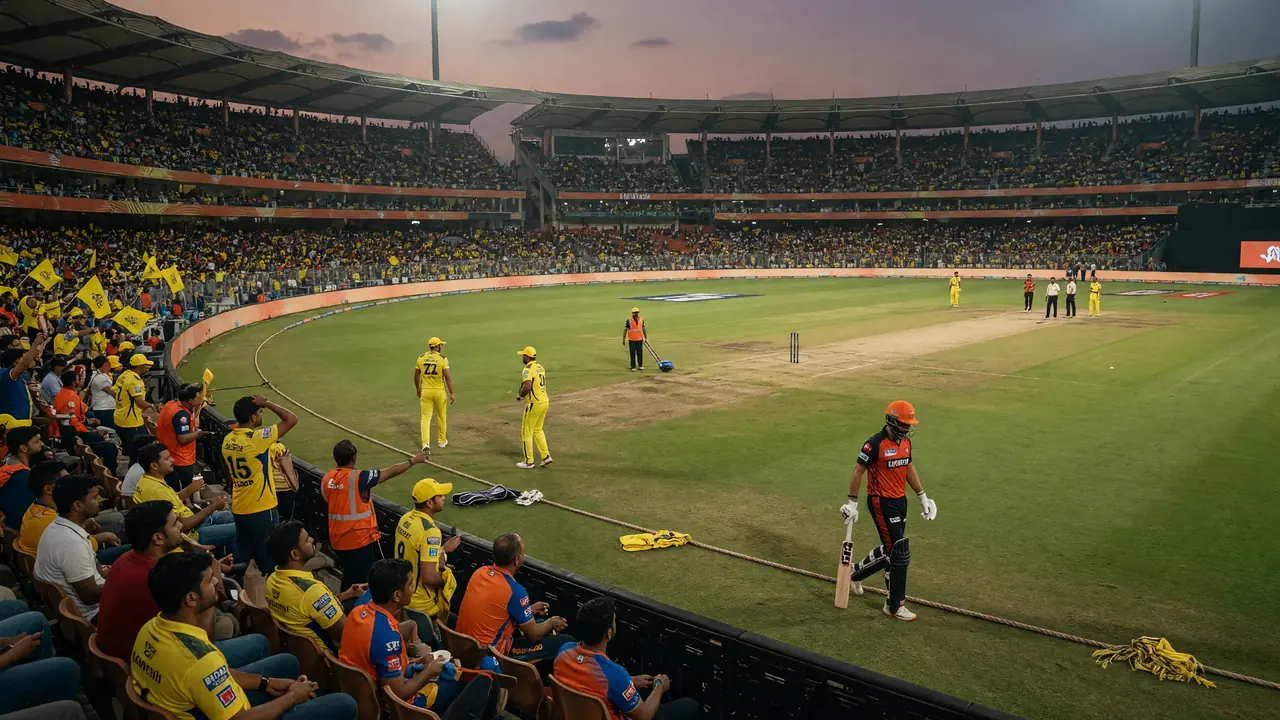
This is not a live team sheet. It is a dated reading of Match 66 as it stood on Thursday, 21 May 2026, when Gujarat Titans and Chennai Super Kings met under clear Ahmedabad skies for a 7:30 PM IST start. Live coverage that evening was listed on Jio Hotstar, with television on the Star Sports Network. The notes below draw on the Cricket Addictor preview published the same afternoon by Vicky Singh, later updated on 24 June 2026, and treat those figures as a historical record rather than current form.
For fantasy readers, the value of an old match is the decision structure it freezes in time: who was carrying runs, who was taking wickets, which surface cues mattered, and which captaincy names were already crowded. Those frozen choices still teach more than a recycled “safe XI” list.
Why Match 66 still matters on the table
By late May the league table had already split the two sides into different pressures. Gujarat Titans had secured a playoff place and were still pushing for a top-two finish, which usually means a second chance in the knockout bracket. Chennai Super Kings were under sharper strain, needing results to keep playoff hopes alive. That split changes how fantasy managers should have read risk. A locked-in side can rotate or rest; a desperate side often stacks batting depth and chases ceilings.
Head-to-head history heading into the fixture favoured Gujarat Titans five wins to four for Chennai Super Kings. The reverse fixture earlier in the season, played in Chennai, had gone Gujarat’s way by eight wickets. Kagiso Rabada took three wickets in that game, and Sai Sudharsan finished unbeaten on 87. Those two names sat near the centre of almost every serious Match 66 shortlist for a reason: recent evidence, not brand memory.
Form that actually moved the shortlist
Sai Sudharsan arrived with 554 runs in 13 matches and a season average above 46. That volume made him the default anchor for Gujarat’s top order and the most natural Super League captain candidate in the preview’s own framing. Consistency at that level reduces the chance of a zero more than a single fifty does; for fantasy points, the floor matters as much as the ceiling when a player is also in line for the double multiplier.
On the Chennai side, Ruturaj Gaikwad carried 321 runs from 13 appearances, including two half-centuries. The raw total sat behind several peers, yet captaincy still pulled him forward because he opened, set fields as captain, and remained the structural spine of Chennai’s batting order. Sanju Samson’s 477 runs in 13 innings, with two centuries, gave Chennai a second high-ceiling name who could keep and bat through the middle. Those two Chennai batters formed the other half of the captaincy debate.
Bowling form cut across franchises. Jason Holder had 13 wickets in seven matches for Gujarat Titans, a strike rate that justified vice-captain attention in formats that reward all-round overs plus lower-order hitting. Rashid Khan sat on 16 wickets, including a four-wicket spell against Rajasthan Royals, which kept him relevant even on a surface the preview labelled pace-friendly. For Chennai, Urvil Patel’s 129 runs in six innings — capped by 65 off 23 balls — marked him as a short-format punt rather than a volume pick.
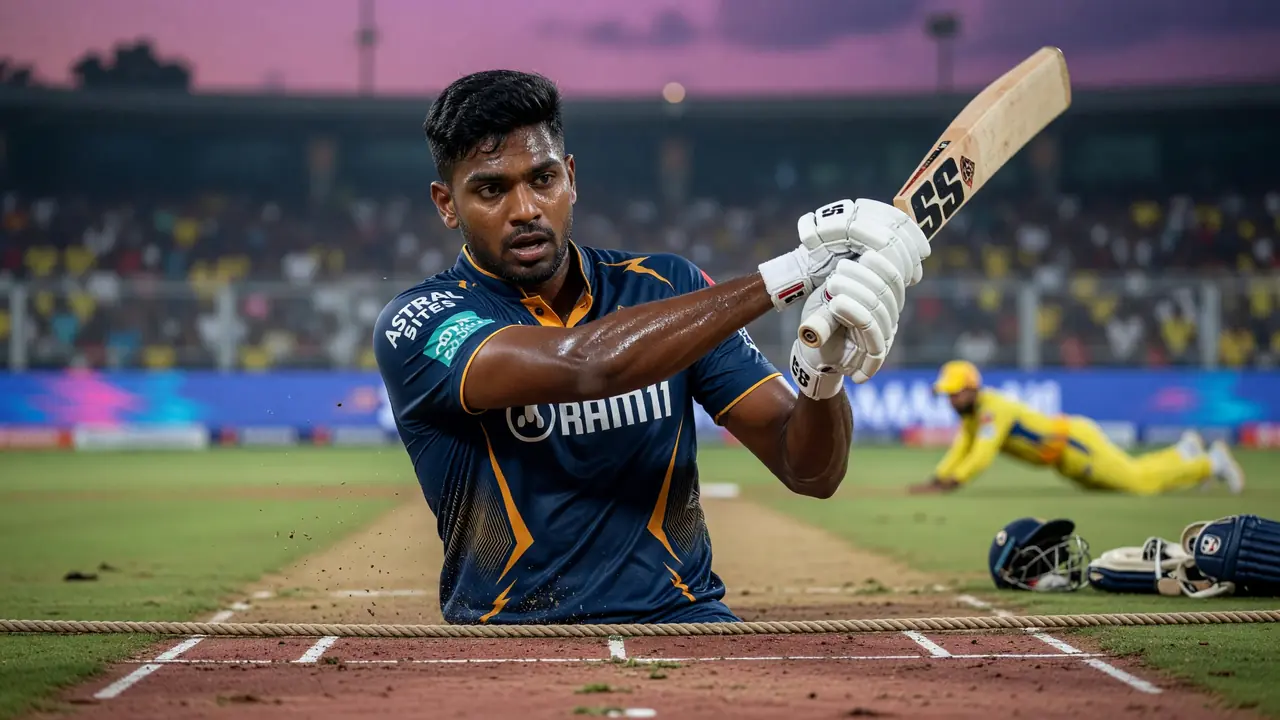
Ahmedabad conditions on the night
The weather note for the evening was straightforward: about 33°C with a clear sky. The surface brief was more useful. The preview called Narendra Modi Stadium batting-friendly and better suited to pace than spin, with an average first-innings score around 198 and a chase win rate near 60 percent. Those three numbers should have shaped more than colour commentary.
A first-innings average near 200 pushes managers toward batters who face the new ball and finishers who still see enough deliveries in a high-scoring script. A chase rate near 60 percent softens the penalty for loading second-innings batters if the toss goes that way. Pace bias raises the relative value of new-ball and death specialists over pure stock spinners, which is why Rabada, Holder and Chennai’s left-arm seam options stayed in the conversation even while Rashid’s season tally still argued for a place.
Injury news also trimmed the bowling sheet. Jamie Overton was listed as an injured Chennai pacer unavailable for the unit, removing one overseas pace option and concentrating overs among the remaining seamers and spinners. Availability notes of that kind are often more decisive than another half-century on a form card, because a player who does not bowl cannot return bowling points.
Predicted elevens that framed the contest
The Gujarat Titans group projected for the night read: Sai Sudharsan, Shubman Gill (captain), Jos Buttler (wicket-keeper), Nishant Sindhu, Washington Sundar, Rahul Tewatia, Jason Holder, Rashid Khan, Arshad Khan, Kagiso Rabada, R Sai Kishore and Mohammed Siraj. That shape mixed a heavy top three with spin balance through Sundar, Rashid and Sai Kishore, plus multiple seam options for a pace-leaning surface.
Chennai Super Kings were projected with Sanju Samson (wicket-keeper), Ruturaj Gaikwad (captain), Urvil Patel, Kartik Sharma, Dewald Brevis, Shivam Dube, Prashant Veer, Akeal Hosein, Noor Ahmad, Anshul Kamboj, Spencer Johnson and Mukesh Choudhary. The batting spine was deep; the bowling attack leaned on left-arm variety, leg-spin through Noor Ahmad, and seam from Kamboj, Johnson and Choudhary after Overton’s absence.
Fantasy combination advice in the same preview settled on a 2-5-1-3 split — two wicket-keepers, five batters, one all-rounder and three bowlers — which is an aggressive batting stack for a venue already priced as high-scoring. That structure only works when the five batters include enough bowling contribution or when the single all-rounder is a true overs guarantee. Holder filled that role for Gujarat managers more cleanly than most Chennai alternatives on the published lists.
Captaincy and the names left on the bench
Captain suggestions concentrated on Sai Sudharsan for Super League builds and Ruturaj Gaikwad for Grand League builds. Vice-captain suggestions paired Sanju Samson and Jason Holder. The logic was role-clean: Sudharsan offered the season’s sturdiest batting floor; Gaikwad offered captaincy-plus-opening upside with more variance; Samson combined keeping involvement with century-level ceiling; Holder bundled wickets, overs and lower-order hitting into one credit slot.
Punt names stayed short. Rashid Khan remained the bowling differential even against a pace-leaning pitch brief, because sixteen wickets and a recent four-for still outranked most pure seam options on expected points if he bowled his full four. Urvil Patel was the batting differential: six innings is a thin sample, yet 65 off 23 balls is the kind of ceiling that moves large-field ranks when it lands.
Players flagged to avoid included Sarfaraz Khan and Glenn Phillips, each listed at 7.5 credits. The warning was not that either was a poor cricketer; it was that their credit cost did not match role certainty for this fixture once the projected elevens and recent usage were weighed. In retrospective terms, those avoid flags are still useful teaching tools: credits are a scarce resource, and a mid-priced name without a clear path to overs or a top-order berth is often dead money.
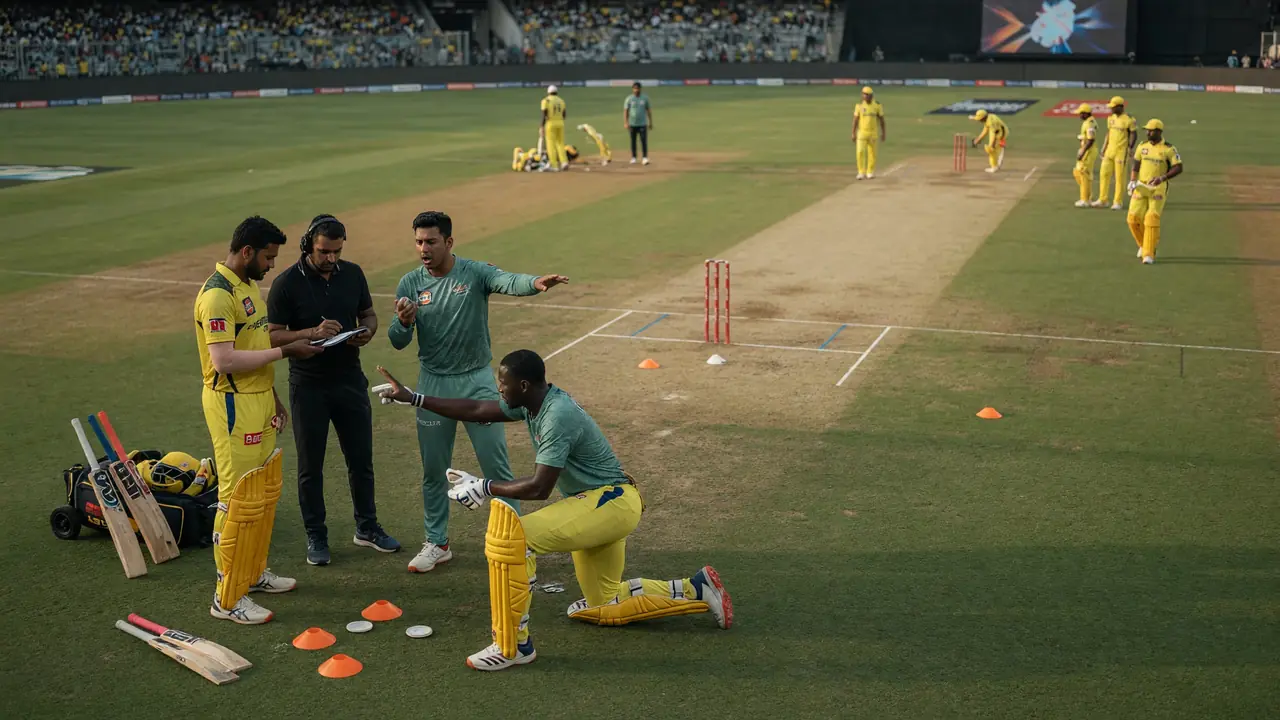
How a careful manager should have used the brief
The first filter was table context. Gujarat’s playoff cushion argued for checking late team news harder than usual; locked sides sometimes rest overseas pacers or rotate finishers. Chennai’s must-win pressure argued the opposite: fewer soft rotations in the top six, more willingness to keep ceiling batters in the middle order. Those are not guarantees. They are prior probabilities that change how much weight a manager puts on a leaked eleven versus a season-long role.
The second filter was the reverse fixture. Rabada’s three-wicket night and Sudharsan’s unbeaten 87 were not ancient history; they were the most recent head-to-head sample on a different ground. Transferring that form wholesale to Ahmedabad would have been lazy, but ignoring it entirely would have been lazier. The clean use was to keep both names inside the core and then ask whether Ahmedabad’s pace lean strengthened or weakened the supporting cast around them.
The third filter was combination math. A 2-5-1-3 build forces the manager to name two keepers who both bat high enough to justify the second gloves slot. Samson plus Buttler was the obvious pair if both started; any other second keeper needed a top-order or finishing role, not a pure reserve glove. Five batters then left little room for pure bowlers who bat at ten. That is why Holder’s all-round brief mattered more than a fourth specialist seamer in many balanced sides.
If you are rebuilding older match notes into a calmer research habit, keep the desk’s Dream11 Today guides library open beside any archive preview. Match 66 is one worked example; the library is where the same filters — role certainty, venue bias, credit waste and captaincy floors — are written without a single fixture’s noise.
What the preview got right as a process, win or lose
The archive preview leaned toward a Chennai Super Kings win on the night. That match-winner call sits in a different bucket from the fantasy shortlist. A side can lose the real contest while still returning the highest fantasy scorers, and the reverse is equally common. The durable lesson is not whether the lean proved correct; it is that the preview separated table pressure, venue numbers, injury attrition and captaincy candidates into distinct layers instead of collapsing everything into one “safe team” graphic.
Process markers that still hold up:
- Lead with confirmed schedule facts — date, time, venue, broadcast — before any opinion.
- Separate season volume (Sudharsan’s 554, Samson’s 477) from sample-size punts (Patel’s six innings).
- Price the pitch with numbers (198 average, 60 percent chase rate, pace lean) rather than adjectives alone.
- Cut injured names early so credits are not wasted on unavailable overs.
- Name avoid picks with a credit reason, not a personality reason.
Those five steps travel better than any single predicted eleven. They also explain why Match 66 remains worth rereading in August: the league has moved on, but the way managers should have weighed Ahmedabad that Thursday has not.
Legacy for later Ahmedabad nights
Narendra Modi Stadium will host more high-scoring league nights. The Match 66 archive is a reminder that “batting-friendly” is not a blank cheque for five pure hitters. Pace lean, chase rates near 60 percent, and a deep Gujarat bowling bench all pulled the optimal stack toward batters who face the new ball plus one genuine all-rounder who still bowls four. Chennai’s injury sheet around Overton showed how quickly an overseas pace plan can thin out, concentrating fantasy ownership on the remaining seamers and on batters who no longer fear a full-strength attack.
For readers sorting older IPL notes into a personal library, keep Match 66 filed under venue process rather than under a final score. The useful residue is the shortlist logic: Sudharsan and Gaikwad as captain poles, Samson and Holder as vice-captain poles, Rashid and Patel as defined punts, Sarfaraz and Phillips as credit traps, and a 2-5-1-3 shape justified by a 198-run venue script. That is the part of 21 May 2026 that still earns a reread when the next Ahmedabad fixture lands on the calendar.