Fantasy cricket tips fall into two camps: prediction tips ("Player X will score big today") and habit tips ("Always verify the playing XI 30 minutes before the toss"). The first camp is brittle — most predictions are wrong most of the time, and the operators' social channels publish them with no accountability. The second camp compounds: habits survive bad weeks; predictions do not.
The advice below is built entirely from the second camp. If you finish reading it and want predictions, you are in the wrong place — and that is the point. Habits produce repeatable results; predictions produce entertainment.
1. Decide the contest before you decide the team
The biggest hidden lever in daily fantasy is contest format. A team built for a head-to-head (ceiling picks, differentiation) is the wrong team for a mega contest (floor picks, ownership awareness). Lock the contest first, then build the team for that format. Doing the reverse — picking the team first, then choosing a contest — produces teams that look great on paper but underperform in the actual scoring environment.
2. Captain from a candidate set, not from the crowd
The most-picked captain is rarely the highest-scoring captain in a given contest. Build a small candidate set of two or three names, write down a one-sentence reason for each, then pick. The discipline of writing the reason is the point — it forces you to evaluate role, expected opportunity, consistency and ownership rather than relying on gut feel or follower count.
3. Cap efficiency is a habit, not a number
Every team has the same salary cap; the skill is in spending it well. Cap efficiency means leaving the obvious big-name on the bench when a cheaper, in-role player fits the team better. Practise cap efficiency on paper before every contest — list the salary of every player, mark the players you would not pick if cost were no object, then look at why you keep including them.

4. Read conditions before you read form
Venue dimensions, surface tendency, weather window and dew factor change the captaincy calculus more than form guide does. A green surface rewards seamers; a flat surface rewards batters; a wet outfield rewards aggressive running. Read conditions first; let form inform the choices that survive.
5. Time-box the call
Lock your XI a fixed window before the toss — fifteen minutes is a sensible default. Decisions made after the toss should be rare, small and reversible. Tinkering after the toss is the most common cause of over-reaction: you read a rumour, you swap a player, you make the team worse, you enter the contest anyway.
6. Skip contests on tired or post-loss days
This is the most important habit on the page. Tired brains make worse fantasy decisions; post-loss brains make impulsive decisions. Set a daily limit, set a weekly limit, and step away when you hit either. The platform will still be there tomorrow; the deposit cap you set for yourself is more useful than any captain pick.
7. Track, don't trust memory
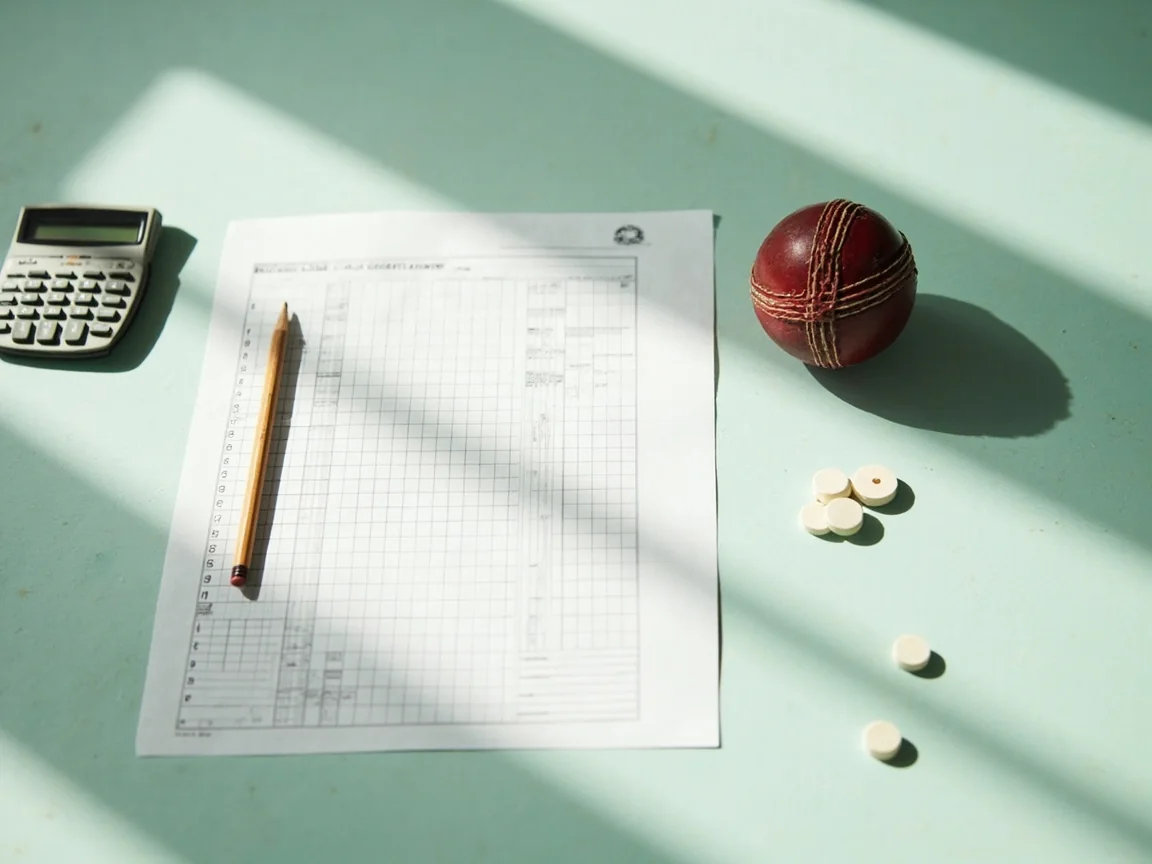
Keep a small notebook — paper or digital — of every contest you enter: format, captain, contest size, your team's final rank, what you would change. After ten contests the notebook reveals patterns memory hides. Patterns are how habits improve.