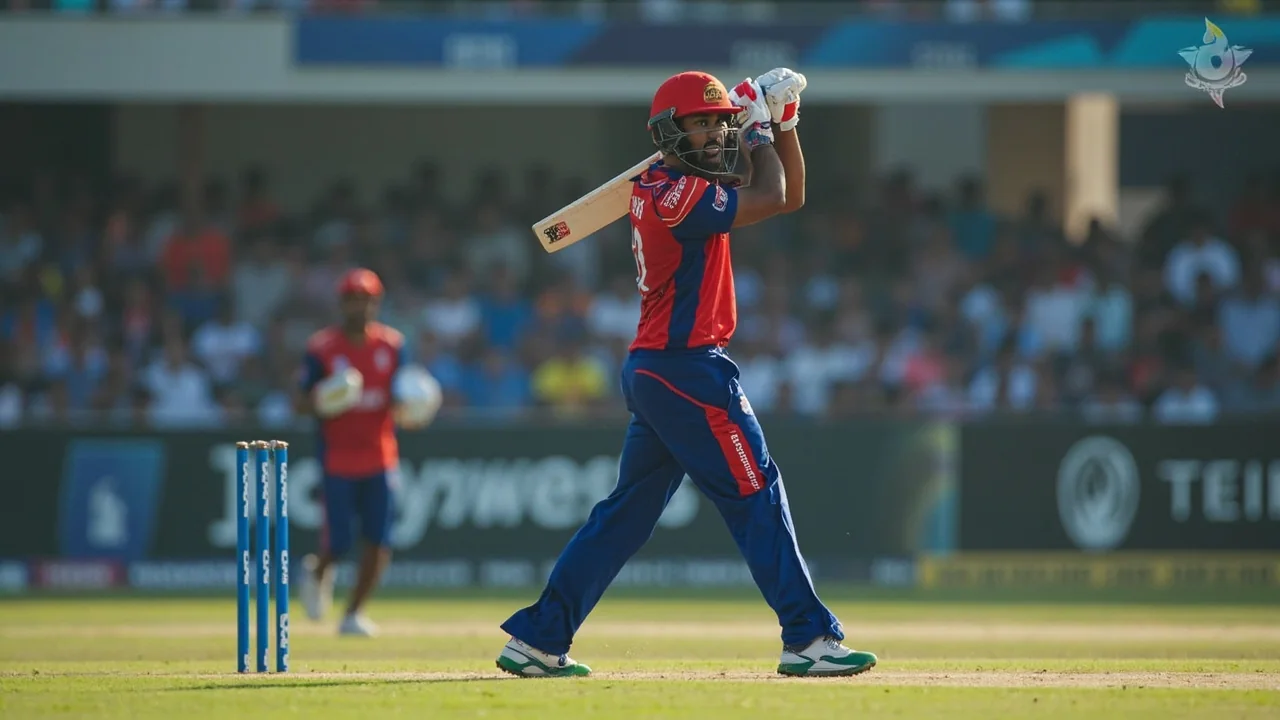
Two of the three form teams in Lanka Premier League 2026 meet at Pallekele on Saturday morning, and the fixture arrives with the kind of contrasting shape that fantasy desks tend to find useful. Colombo Kaps sit third after a four-wicket win over Dambulla Sixers — a chase that said more about their middle-overs control than about any headline batting cameo. Galle Gallants remain second on the table despite a six-wicket loss to Kandy Royals after posting 208, a result that exposed exactly the kind of death-overs gap a T20 table eventually punishes.
The early-season head-to-head went Galle's way. The Gallants beat Colombo earlier in LPL 2026, which is the kind of context that travels fast in dressing rooms and slow in the bowling plans. The interesting tactical question for Saturday is whether Colombo's chase-friendly template — built around Kamindu Mendis and a Mujeeb-led spin choke through the middle — survives a Pallekele surface that has consistently rewarded the side batting second.
The desk's read, built around the published form, the team sheets and the venue profile, is that Colombo Kaps go in as slight favourites. The reasoning, the captain calls and the playing-XI shape are set out below; the fantasy frame around the same match sits alongside the broader match predictions and fantasy preview collection.
Why the form line points to Colombo
Form lines in a T20 league rarely survive a week, but the shape of each side's last match tells a more durable story. Colombo's win over Dambulla was a chase — the most pressure-heavy way to win a T20 — and the chase was anchored by captain Kamindu Mendis, who now sits on 250 runs for the season and continues to be the single most reliable batter in the lineup. Rubin Hermann's 48 off 26 in that game gave Colombo a Powerplay platform they have not always had, and the bowling unit kept Dambulla's middle order quiet enough to make the chase look routine rather than grinding.
Galle's loss to Kandy was the opposite shape. The Gallants posted 208 — a total that wins the majority of T20 games — and still lost by six wickets, with Kandy getting through the chase with balls to spare. The Gallants' batting is not in doubt: Sam Harper has 275 runs this season, Charith Asalanka produced an unbeaten 72 off 32 in the previous game, and Nurul Hasan continues to give them starts. The concern is the bowling, and specifically the death-overs gap that has now appeared in back-to-back fixtures.
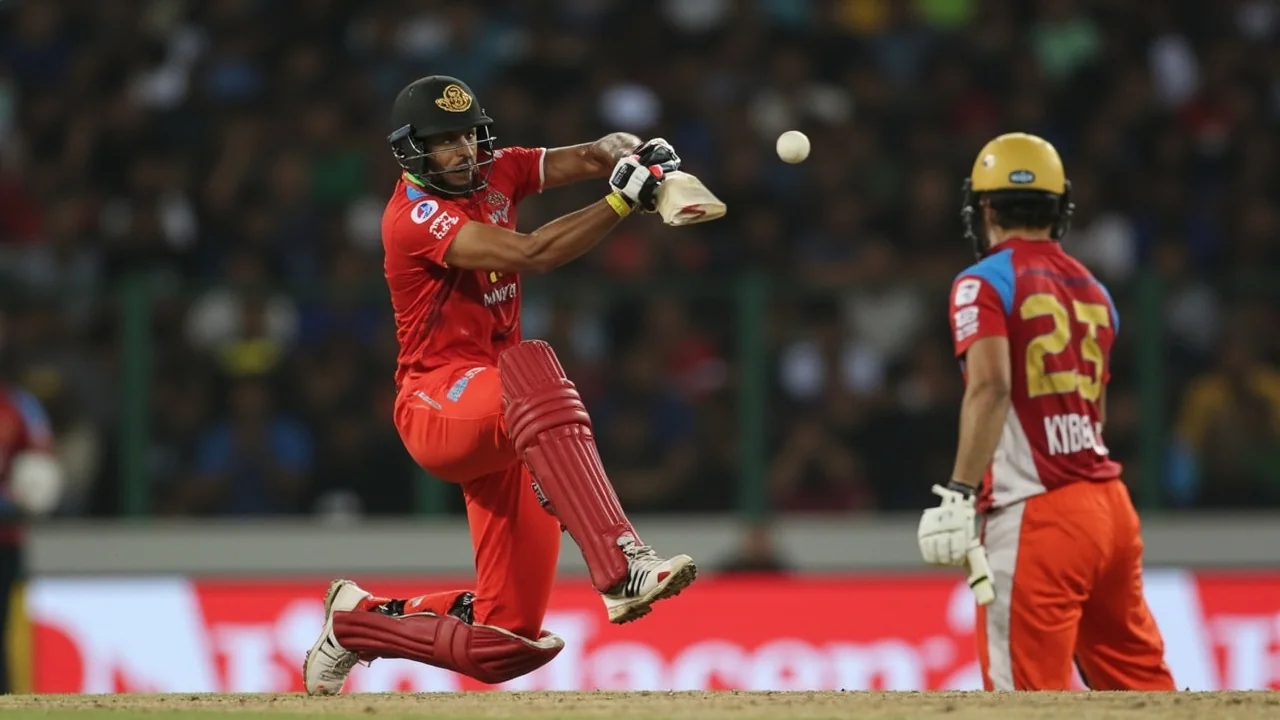
That contrast — Colombo's chase-discipline and middle-overs spin against Galle's top-heavy batting and death-overs wobble — is the structural reason the desk leans Colombo despite the venue and the head-to-head. T20s are won in different phases, but the phase that has separated these two sides so far this season has been overs 7 to 16. Colombo has controlled that phase with both bat and ball; Galle has only controlled it with the bat.
The captain calls for fantasy teams
For fantasy players building a lineup around this fixture, the captain pick is Kamindu Mendis. He bats in a position where he can take the innings through, has 250 runs already this season, and plays for the side that has more reliable batting depth — which raises his floor in any chase. The vice-captain pick, if the match is set up to favour the chase (which Pallekele's dew pattern suggests it will be), is Sam Harper. Harper has 275 runs at the top of the order for Galle, his 72 off 38 in the previous game showed he is in rhythm, and he benefits more than anyone else from a batting-second script where dew brings the ball onto the bat.
The differential pick is Mujeeb Ur Rahman. The Afghan off-spinner has nine wickets in LPL 2026 and is currently the bowler most likely to break a Galle middle-overs partnership. Galle's batting has the muscle to absorb a quiet over, but it does not yet have a settled answer to a spinner who can land a flat, quick googly on a Pallekele surface that is slowing as the match goes on. A differential captain call on Mujeeb pays back when the middle order collapses in the 12th to 16th over — which is exactly how the last two Galle chases have ended.
Probable playing XIs
Team sheets in T20 leagues tend to hold steady once the top order is settled, but Colombo has used Sadeera Samarawickrama and Janith Liyanage in different combinations in the middle. Galle's depth chart, with Mohammad Nawaz and Mehidy Hasan Miraz both available, allows for two spin-bowling options in the XI on a Pallekele surface that slows in the second innings.
The probable XI for Colombo Kaps, based on the combination that beat Dambulla: Kamindu Mendis (c), Rubin Hermann, Ben McDermott, Sadeera Samarawickrama (wk), Janith Liyanage, James Neesham, Wanuja Sahan, Malsha Tharupathi, Mujeeb Ur Rahman, Shahnawaz Dahani, Milan Ratnayake. Shahnawaz Dahani and Milan Ratnayake are the seam pair likely to take the new ball, with Mujeeb and Malsha Tharupathi expected to bowl out the middle.
The probable XI for Galle Gallants: Dasun Shanaka (c), Sam Harper (wk), Nurul Hasan, Charith Asalanka, Sahan Arachchige, Chamika Karunaratne, Mohammad Nawaz, Tharindu Rathnayake, Eshan Malinga, Sachindu Colombage, Akif Javed. Eshan Malinga leads the tournament wicket chart with 11 wickets; Sachindu Colombage took three in the last game and is likely to keep his place ahead of a fourth-seam option.
The pitch at Pallekele
Pallekele International Cricket Stadium has produced batting-friendly wickets throughout LPL 2026. The surface plays true with consistent bounce, the square boundary is short enough that batters can target it without taking undue risks, and the outfield is quick enough that anything middled runs to the rope. Pacers get something with the new ball — mostly seam movement off the surface in the first two overs — and spinners come into the game from the seventh over onwards as the pitch slows slightly.
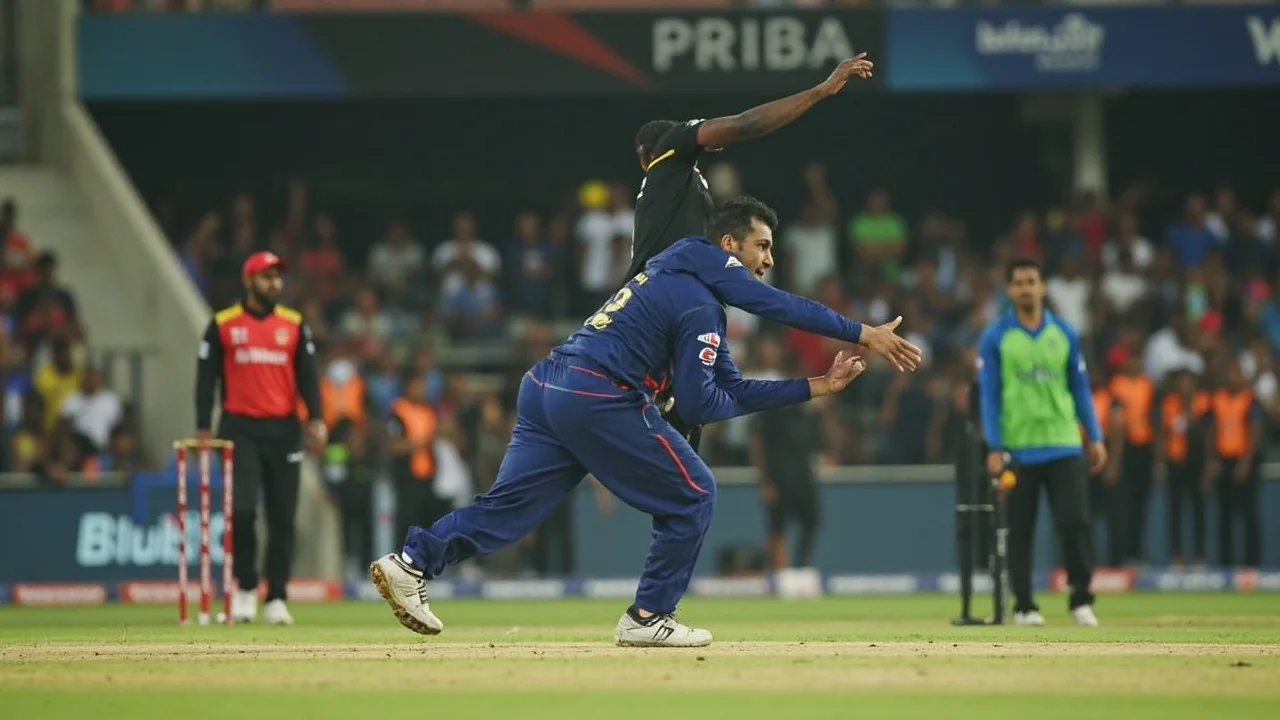
The dew pattern is the detail fantasy players should pay closest attention to. Evening matches in Kandy see measurable dew from around the tenth over onwards, which makes a second-innings chase significantly easier than a first-innings defence. The history at this venue bears that out: chasing sides have won more often than not, and a first-innings score in the 170 to 180 range is generally competitive under normal playing conditions rather than dominant.
A useful benchmark for fantasy projection is the score range: 154 to 170 if Colombo bats first, 136 to 155 if Galle bats first. Both ranges are below the 208 Galle posted in the last game, which says less about the pitch and more about how bowling-heavy Colombo's structure is. A 170-defended total has lost at Pallekele more often than it has won. A 145-defended total has almost always lost.
Weather, broadcast and the toss
The forecast for Saturday is partly cloudy with a 20% rain chance, a temperature around 27°C, 73% humidity and a 12 km/h wind. None of those numbers is severe enough to threaten playing time. The most likely disruption is a brief shower in the first half, which is the kind of rain delay that costs overs but rarely costs a full match at Pallekele. The broadcast is on FanCode, with ball-by-ball commentary, live scorecards and post-match analysis available through the app and the website.
On the toss, the published preview puts Galle Gallants as the more likely winner of the coin flip — and the more likely side to bowl first if they do. The reasoning is straightforward: at a venue where the chasing side wins more often than not, the second-innings captaincy is the favourable captaincy, and most LPL captains at Pallekele have chosen to field. Colombo's captain Kamindu Mendis, by the same logic, is also expected to bowl first. The toss does not swing the desk's read on the favourite; it only sharpens the captain-vice-captain choice for fantasy lineups, because the second-innings batters carry a higher ceiling under dew.
The published winning chances
The Cricketwebs preview gives Colombo Kaps a 72% chance of winning and Galle Gallants 28% — the kind of split that reflects Colombo's structural edge rather than any single matchup. The 72-28 line is wider than the form-line difference alone would justify: it includes the venue, the dew pattern and the head-to-head, all of which lean Colombo. A more conservative desk might call it 60-40. Either way, the favourite is clear, and the underdog's route back into the contest runs through their top three batters keeping Galle's score above 170 in the first innings.
For fantasy players, the cleaner way to read those numbers is not the headline percentage but the conditions behind it. Colombo wins this match most often when Mujeeb takes a wicket in the powerplay, when Kamindu Mendis bats through the innings, and when the second-innings chase is set up under dew. Galle wins this match most often when Sam Harper and Charith Asalanka bat through the powerplay together, when the bowlers land their death-over yorkers, and when Colombo loses a top-order wicket in the first three overs. Those four checkpoints — two for each side — are a more useful pre-match checklist than the percentage.
What this match means for the table
The 19th match of LPL 2026 sits in the part of the schedule where the top four begin to separate from the middle. Colombo enters the round third; a win would lift them to second and put clear daylight between them and the chasing pack. A loss, however, drops them back into a tie with two other sides on points — and a tie at this stage of a T20 league often comes down to net run rate, which is a far more volatile ranking metric than most fantasy players account for.
Galle enters second; a win consolidates their top-two position and effectively seals a playoff slot before the halfway mark. A loss, by contrast, opens the door for Kandy and Dambulla to leapfrog them — and given Galle's net run rate already took a hit from the Kandy loss, two losses in a row would leave them vulnerable on tiebreakers as well. Both sides are playing for more than the two competition points on offer; both are playing for the position those points unlock at the back end of the league stage.
What to watch in the first six overs
The Powerplay is where this fixture will most likely be decided. Colombo's Powerplay record is built around Rubin Hermann at the top, with Kamindu Mendis providing the anchor once the field restrictions lift; Galle's Powerplay is built around Sam Harper and either Nurul Hasan or Charith Asalanka giving the side a fast start. A Powerplay of 55 or more from either side, without losing more than one wicket, effectively forces the chasing side to play catch-up from over seven onwards — and the dew factor only multiplies that chase pressure.
The middle overs, overs 7 to 16, are the second phase to watch. This is where Mujeeb typically operates for Colombo, and where Mohammad Nawaz and the Galle spinners try to keep the run rate in check. The team that wins this phase usually wins the match at Pallekele, simply because the death-overs gap between the two sides — Galle's structural weakness, Colombo's relative strength — compounds over the final four overs.
The desk's prediction, briefly
Colombo Kaps to win. The reasoning is the middle-overs bowling differential — Mujeeb versus a Galle middle order that has not yet found a settled answer to him — combined with the chase-friendly template Colombo has built over the last three matches. Galle have the batting to win any match on their day; they do not, on the current evidence, have the bowling to win this one. If Sam Harper and Charith Asalanka bat through the Powerplay together and the Galle seamers land their yorkers under pressure, the 72-28 line flattens considerably. Without both of those things happening, the favourite does what favourites tend to do at a venue that rewards the chasing template.
The desk will revise the read after the toss once the playing XIs are confirmed and the captain's choice is known. Until then, the cleanest fantasy frame around the fixture sits in the wider match predictions and fantasy cricket collection, where the captain picks, the venue profile and the format-specific scoring notes are kept current with the rest of the LPL 2026 schedule.