Editorial desk online Independent · Not affiliated with Dream11 Last reviewed: 21 Jul 2026

Fantasy match prep: read conditions, not fan takes.

Verified: 21 Jul 2026Editorial review: Dream11 Today deskApproach: Conditions first

How to frame pre-match analysis — reading conditions, the toss decision, and the captaincy framework that survives a bad week. No fabricated predictions, no team-name templates.

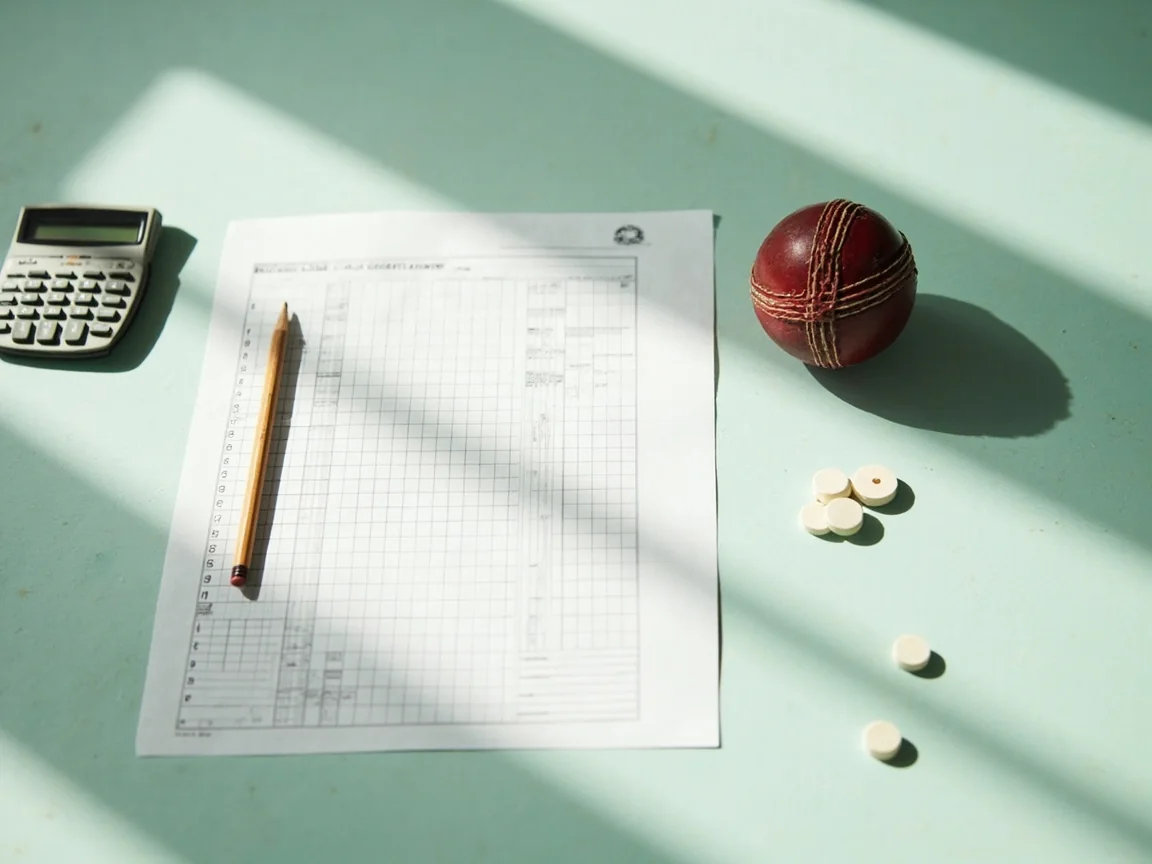
Adult reading pitch and weather conditions before a fantasy match.

Match-day fantasy decisions are usually framed as "who will score big today?" — but that framing produces brittle picks. A more useful framing is: under these conditions, which roles are most likely to outperform, and which players fit those roles at a reasonable ownership level? The conditions drive the picks; the picks do not drive the conditions.

Step 1: read the conditions

Venue

Venue dimensions and surface tendencies are the single most predictive factor in T20 fantasy. Small grounds reward aggressive batting; large grounds reward bowlers who can find the pitch. Some venues have famous dew windows (typically evening matches in the subcontinent) that swing the contest towards the team chasing. Check the venue's recent results; one pattern over five matches is worth more than ten patterns over five seasons.

Surface

Surface matters more than most fantasy guides admit. A green seaming surface rewards seamers; a flat surface rewards batters; a dry turning surface rewards spinners. The toss decision is partly a function of the surface: teams usually prefer to chase on a flat surface (knowing the dew will help) and bat first on a green surface (knowing the surface will deteriorate).

Weather

Weather windows affect both the playing conditions and the captaincy calculus. Overcast skies help seamers; clear skies with bright sun help batters read the ball. Rain forecasts matter less than the timing of the rain — a brief interruption mid-innings is far more disruptive than a wet outfield at the start.

Step 2: filter the squad list

Once you have read the conditions, look at the squad list. Ignore last-minute rumour; rely on the tournament's official playing XI, usually published 30 minutes before the toss. Cross-check on the broadcast partner's website, not on Twitter. If a key player is missing, the captaincy calculus shifts dramatically.

Step 3: build the captaincy candidate set

Build a small candidate set of two or three names. Evaluate each on four lenses: role fit (does the player fit the conditions?), expected opportunity (will the conditions give them the ball/overs they need?), consistency (have they delivered in similar conditions recently?), and ownership (what percentage of the field will pick this player?). A captain pick that scores 80 at 80% ownership contributes little differential value; the same score at 25% ownership is a fantasy win.

Step 4: write the reason

Pick your captain and vice-captain and write down one sentence each. The act of writing forces you to articulate the reason; if you cannot, you are picking from noise. The reason goes in your notebook (you do have one — see the fantasy tips guide) and becomes part of the audit trail you review after every contest.

What this approach deliberately avoids

  • "Player X is in form" — without context, "form" is a meaningless phrase
  • "The pitch will help spinners" — without naming which spinners, which roles, which captaincy pick
  • "My gut says 70 today" — gut is fine as a tie-breaker, never as the primary decision
  • "Pick the obvious captain" — the obvious captain is the highest-owned captain; the highest-owned captain rarely wins large-field contests

The honest limitation

Even with perfect conditions reading, a strong squad filter and a defensible captain pick, you can lose. Fantasy outcomes carry irreducible variance. The point of the framework is to remove avoidable mistakes; it does not promise wins. Treat any source that promises wins as marketing.

FAQ

Do you publish match predictions?
No. We publish the framework, not the predictions. The framework is what survives a bad week; predictions do not.
How do you read a pitch?
Look at the venue's recent results (last 5 matches), the surface colour and grass cover, and the weather forecast. Combine these with the team composition to estimate which role will benefit most.
What is the role of the toss?
The toss sets the conditions for captaincy. A team batting first needs early wickets to win; a team chasing needs wickets in hand. Your captaincy pick should account for which side is batting first.

Read the conditions, then build the team.

Pair this with the captaincy framework in the how-to-play walkthrough and the scoring reference.

What "predictions" really means here

This site deliberately avoids publishing predictions in the hot-tip sense ("Player X will score 50 today"). Predictions in that sense are not testable, not repeatable and not honest. The "predictions" we publish are conditional scenarios: "If the surface holds, this role is most likely to outperform; if it deteriorates, this other role is most likely to outperform." Conditional scenarios are testable (you can check after the match whether the condition held and whether the predicted role outperformed); they are repeatable across multiple matches; and they are honest because they describe a probability range, not a certainty.

The weather window

Weather windows are the most under-used source of edge in fantasy research. Most fantasy guides mention weather in passing, but the timing of weather changes matters more than the headline forecast. A 30-minute rain interruption mid-innings is far more disruptive than a wet outfield from the start; a clear evening sky after an overcast afternoon is a different contest from a clear afternoon. Read the hourly forecast, not the daily summary.

The team-news timeline

Team news follows a predictable timeline: probable XI published 24 hours before the toss; final XI confirmed 30 minutes before the toss; impact-player swaps confirmed at the toss. Your research workflow should mirror this timeline — use the probable XI for early planning, lock the team against the final XI, and treat any post-toss change as a small, reversible update rather than a full rebuild. The discipline is what saves you from over-trading on rumours.

The "what to watch next" question

At the end of every match, write down three things to watch for in the next match: a player whose role changed; a venue whose surface changed; a contest format whose entry dynamics changed. The notebook is the source of your edge over the season; the patterns it reveals are the basis for next week's captaincy candidate set.

Editorial addendum: a closing reflection

This guide is part of the Dream11 Today editorial library, an independent publication not affiliated with Dream11, Dream Sports or any real-money gaming operator. The desk's purpose is to publish research-first, evidence-led guides that help Indian adults decide whether real-money fantasy fits their situation and, if so, how to navigate the platform's product, legal and account flows with as few avoidable mistakes as possible.

Every guide on this site follows the same editorial standards: claims are sourced where they are not common knowledge; volatile information (bonus terms, scoring rules, legal status) carries a "verified on" stamp and is reviewed within 30 days; commercial links carry rel="sponsored nofollow" and an adjacent disclosure; and the editorial position is unaffected by commercial relationships. The standards apply equally to the most casual beginner guide and to the most technical APK safety walkthrough.

If you have read this far, you are already doing the editorial work the desk exists to encourage. The next step is to apply what you have read: set a deposit cap on day one; bookmark the operator's official channels; bookmark the responsible-play page; keep a notebook of every contest; re-read the standards after every month of play. Habits compound; predictions do not.

For corrections, sourcing questions or disclosure queries, use the contact page. We aim to respond within seven working days. For product support, use the operator's in-app flow (Help → Contact support) — the desk does not have access to the operator's account systems and cannot resolve product issues.

Finally, a reminder: real-money fantasy is entertainment, not income. The platform's rake structure means the average player loses money over time; no honest publication can promise a profit. Treat every contest entry as spent money; set a hard monthly cap; step away the moment the experience stops being fun. If the platform is no longer working for you, the responsible-play guide explains how to opt out cleanly.

A pre-match preparation checklist

  1. Read the conditions first

    Venue, surface, weather window, dew factor — the conditions drive the picks.

  2. Verify the playing XI

    Cross-check on the official tournament site and broadcast partner, not on Twitter.

  3. Build a captaincy candidate set

    Two or three names, evaluated on role, opportunity, consistency and ownership.

  4. Write down the captain reason

    One sentence; if you cannot write it, you are picking from noise.

  5. Lock the team 15 minutes before toss

    Decisions made after the toss should be rare, small and reversible.

  6. Note three things to watch next match

    Player role change, venue surface change, contest-format dynamic change.

PLAY NOW